
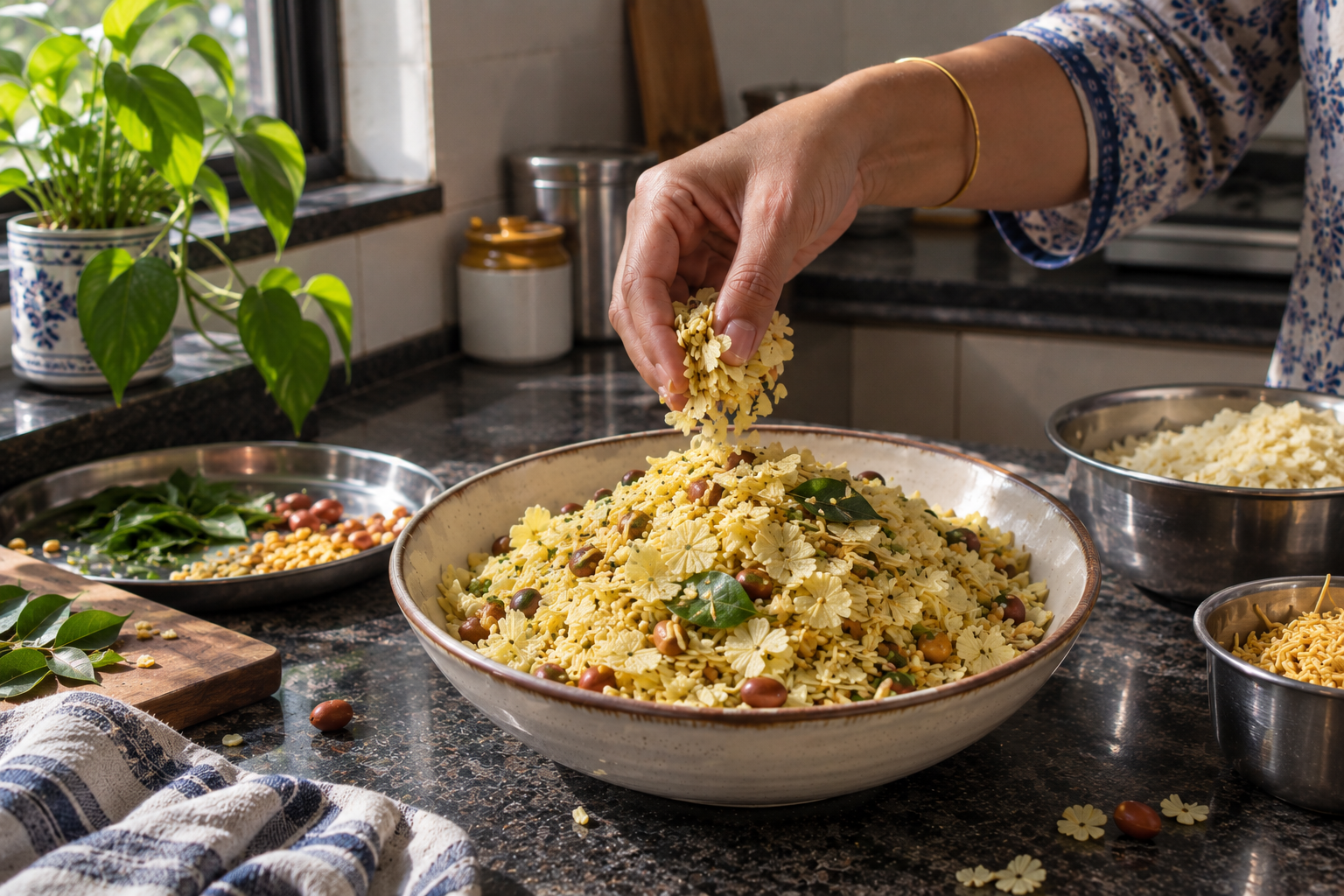
What Makes Namkeen Crunchy? Understanding the Texture of Indian Snacks
When people talk about their favourite namkeen, they usually mention taste first, but there is another part of the experience that is just as noticeable: crunch. That first crisp bite, the light breaking texture of sev, the satisfying bite of a snack stick, or the different textures found in a mixture can make a simple snack much more enjoyable. In fact, current snack-industry research highlights taste and texture as important parts of the modern snacking experience, with consumers increasingly interested in snacks that combine local flavours with interesting textures.
Why Texture Matters in Indian Namkeen
Indian namkeen is not one single type of snack. It includes many different products with completely different shapes, ingredients and textures. FSSAI's classification of Indian savoury snacks includes products such as sev, gathiya, chiwda, mixtures, dalmoth, bhujia and several other snack varieties. Because these products are made in different ways, the eating experience can also be very different. Some are fine and delicate, some are firm and crunchy, while mixtures can combine several textures in one handful.
This variety is one of the reasons Indian namkeen remains such an interesting snack category. A person may choose fine sev when they want something light and crisp, while a mixture may be preferred when they want several flavours and textures together. A crunchy stick can provide a completely different bite from a traditional sev or gathiya. The ingredients matter, but so does the physical structure of the snack.
What Creates a Crunchy Snack?
The texture of a namkeen depends on several factors, including the ingredients used, the shape of the product, its preparation method and how the finished snack is handled and packaged. FSSAI's standards for Indian namkeens recognise processes such as frying, baking, extrusion, puffing and roasting among the methods used for different types of namkeen. These different processes naturally create different structures and eating experiences.
For example, a thin sev has a very different bite from a thicker gathiya. A snack stick has its own shape and surface, while a mixture combines multiple components. This means that crunchy namkeen is not defined by one particular shape or preparation method. Instead, crunch can be experienced in many different ways.
Packaging and storage also matter after the product has been prepared. Namkeen is enjoyed for its characteristic texture, so protecting the product from conditions that can affect quality is an important part of packaged-snack handling. Once a packet is opened, keeping it properly closed and storing it appropriately can help maintain the product's intended characteristics.
Different Textures Make Namkeen More Interesting
Imagine eating a mixture made only from one type of snack. The flavour might still be enjoyable, but every bite would feel quite similar. Now imagine a mixture containing sev, crunchy pieces, peanuts, pulses and other components. Every handful can have a slightly different combination. That changing texture is part of what makes namkeen mixtures popular.
Current NIQ research on snacking in the Asia-Pacific region specifically identifies bold textures and multi-sensory experiences as important elements of snack innovation. The same research also notes that local flavours and regional identity continue to matter to consumers. For Indian namkeen, this combination is especially relevant because the category already has a long history of combining different ingredients, shapes and textures.
Texture and Flavour Work Together
A good snack experience is rarely about flavour alone. The sound and feeling of a crisp bite can influence how people experience the seasoning as well. A spicy snack with a firm crunch can feel different from a delicate snack with the same seasoning. Similarly, a sweet-and-spicy mixture can provide a different experience when it contains several textures rather than only one.
This is one reason snack manufacturers pay attention not only to namkeen flavour, but also to product shape and texture. NIQ's 2026 research describes taste, texture and product identity as important elements in today's snacking landscape.
For consumers, this simply means that choosing a snack can be about more than asking, “Which flavour do I like?” It can also be about asking, “What kind of bite do I want?”
- Light and fine: sev and similar fine-textured namkeen can provide a delicate crunch.
- Mixed and varied: mixtures can combine sev, peanuts, pulses, flakes and crunchy pieces for different textures in one snack.
Why Crunch Is Important for Packaged Snacks
Packaged namkeen has to travel from the manufacturing facility to the retailer and eventually into the consumer's home. During that journey, maintaining the intended product quality is important because consumers expect the snack to provide the texture associated with that product when they open the packet.
This is particularly relevant for snacks because texture is something people notice immediately. A product can have an appealing flavour, but if its expected texture is not there, the overall experience can feel different. That is why manufacturing, packaging, storage and handling all form part of the journey of a packaged snack.
For a brand such as Zemos Foods, which offers products including sev, gathiya, chevda, mixtures and crunchy snack varieties, texture becomes an important part of having a diverse product range. Zemos currently lists several categories of Indian savoury snacks, allowing consumers to choose between different flavours and formats.
The Growing Importance of Snack Texture
The Indian snack market is becoming more diverse, and consumers are exposed to more products and flavour combinations than before. NIQ's recent research shows that snack innovation is increasingly combining local flavours with new formats and textures.
That does not mean traditional namkeen needs to become something completely different. In many cases, the familiar texture of sev, gathiya or a classic mixture is exactly what consumers are looking for. At the same time, manufacturers have opportunities to create new snack experiences by combining different shapes, ingredients and seasonings.
Conclusion
The next time you enjoy a bowl of Indian namkeen, pay attention to more than the flavour. Notice the first crunch, the difference between thin and thick pieces, the texture of peanuts or pulses, and the way different components come together in a mixture. These small details are a major part of what makes Indian savoury snacks enjoyable.
The world of namkeen is built around variety—not only in taste, but also in shape, texture, ingredients and preparation methods. From fine sev to crunchy sticks, gathiya and mixed namkeen, every product can offer a different kind of bite. As snack preferences continue to evolve, research suggests that texture will remain an important part of how consumers experience and discover new snacks.
For Zemos Foods, this wide range of textures fits naturally with its selection of Indian savoury snacks. Whether someone prefers a fine sev, a crunchy mixture or another traditional namkeen, the texture is part of what turns an ordinary snack into an enjoyable one.