
Table of Contents
- Understanding Different Types of Indian Savory Snacks: A Complete Snack Guide
- The Popularity of Indian Savory Snacks
- What Is Namkeen?
- Sev: One of India's Most Popular Snack Categories
- Snack Mixtures: A Blend of Textures and Flavors
- Poha-Based Snacks
- Peanut-Based Snacks
- Potato-Based Snacks
- Sticks and Extruded Snacks
- Sweet and Savory Snack Combinations
- Regional Snack Specialties
- Why Indian Savory Snacks Remain Popular
- Variety
- Convenience
- Sharing Culture
- Versatility
- Cultural Significance
- Choosing the Right Snack for Different Occasions
- Tea-Time Gatherings
- Family Celebrations
- Travel
- Office Breaks
- The Future of Indian Snack Culture
- Conclusion
Understanding Different Types of Indian Savory Snacks: A Complete Snack Guide
India is a country known for its rich culinary traditions, diverse regional flavors, and vibrant food culture. Among the many food categories that have become an important part of everyday life, savory snacks hold a special place. Whether it is a quick bite during tea time, a treat for guests, a companion during travel, or something enjoyed during celebrations, Indian savory snacks have remained a favorite across generations.
From the bustling streets of major cities to small towns and villages, savory snacks are deeply woven into daily routines. Every region has its own specialties, ingredients, preparation methods, and flavor profiles. Some snacks are mild and comforting, while others offer spicy, tangy, or sweet-and-savory combinations. This incredible variety is one of the reasons Indian snacks continue to be loved by people of all ages.
Today, the world of Indian savory snacks is larger than ever. Traditional recipes have evolved into convenient ready-to-eat options, making it easier for consumers to enjoy their favorite snacks anytime and anywhere. Whether served during family gatherings, packed in lunchboxes, or enjoyed during evening tea, savory snacks continue to be a popular choice.
This guide explores the different types of Indian savory snacks, their unique characteristics, and why they continue to be an essential part of Indian food culture.
The Popularity of Indian Savory Snacks
Savory snacks have become an important part of Indian eating habits because they offer convenience, variety, and satisfaction. Unlike full meals, snacks can be enjoyed at any time of the day. They are perfect for social occasions, office breaks, travel, and casual cravings.
One reason for their popularity is the incredible range of ingredients used in Indian snack preparation. Gram flour, lentils, rice flakes, peanuts, spices, potatoes, corn, and various seasonings are combined to create distinctive textures and flavors.
Indian snacks are also highly versatile. Some are enjoyed as standalone snacks, while others are paired with tea, coffee, beverages, or even meals. Their adaptability makes them suitable for countless occasions.
What Is Namkeen?
The term "namkeen" is commonly used in India to describe savory snacks. The word itself refers to salty or savory foods, although modern namkeen varieties often include spicy, tangy, and mildly sweet flavors as well.
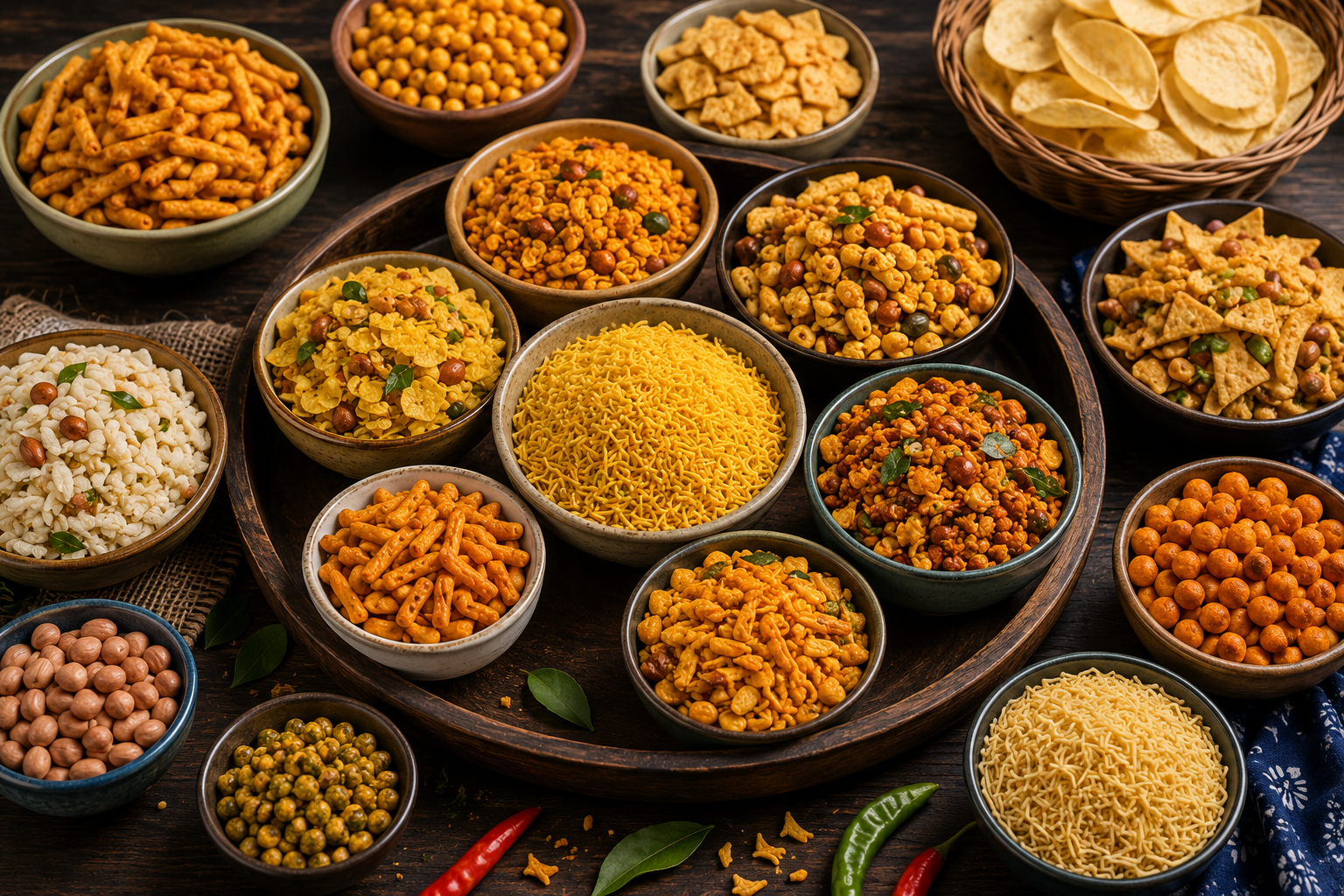
Namkeen products come in various forms:
- Sev
- Mixtures
- Sticks
- Fried lentil snacks
- Peanut snacks
- Rice-based snacks
- Potato-based snacks
- Regional specialties
Today, namkeen is available in homes, restaurants, supermarkets, convenience stores, and online platforms, making it one of India's most accessible snack categories.
Sev: One of India's Most Popular Snack Categories
Sev is among the most recognizable Indian savory snacks. Made primarily from gram flour and seasonings, sev is known for its thin noodle-like shape and versatile flavor options.
Sev can be enjoyed directly from the pack or used as a topping for various dishes.
Popular sev varieties include:
- Aloo Sev
- Ratlami Sev
- Medium Sev
- Usal Sev
- Fine Sev
- Thick Sev
Each variety offers a unique texture and flavor profile. Some are mild and light, while others feature bold spice blends that appeal to those who enjoy stronger flavors.
Sev remains a staple in Indian households because it is convenient, versatile, and suitable for a wide range of occasions.
Snack Mixtures: A Blend of Textures and Flavors
Snack mixtures are another widely loved category of Indian savory snacks. These products combine multiple ingredients into a single snack experience.
Typical ingredients may include:
- Sev
- Peanuts
- Lentils
- Rice flakes
- Fried pulses
- Spices
- Curry leaves
The appeal of mixtures lies in their variety. Every handful offers different textures and flavors, making them enjoyable for longer snacking sessions.
Common mixture categories include:
- Hot Mix
- Tikha Mitha
- Khatta Mitha
- Nadiyadi Mix
- Poha Chevda
- Crispy Mix
These snacks are particularly popular during family gatherings, festive celebrations, and evening tea sessions.
Poha-Based Snacks
Poha, or flattened rice, is widely used in Indian snack preparation. Its light texture and ability to absorb flavors make it ideal for savory snack products.
Poha-based snacks are often combined with:
- Peanuts
- Spices
- Curry leaves
- Lentils
- Sev
These snacks are appreciated for their balanced texture and lighter feel compared to some other snack categories.
Poha snacks are commonly enjoyed as:
- Tea-time snacks
- Travel snacks
- Office snacks
- Family sharing snacks
Their popularity continues to grow among consumers looking for satisfying yet versatile snack options.
Peanut-Based Snacks
Peanuts have long been an important ingredient in Indian savory snacks. They contribute texture, flavor, and variety to many snack products.
Peanut snacks may be:
- Lightly seasoned
- Spicy
- Tangy
- Combined with mixtures
- Included in namkeen blends
Peanuts are particularly valued because they complement many different ingredients and flavor combinations.
Many mixture products rely on peanuts to provide contrast and enhance the overall snacking experience.
Potato-Based Snacks
Potatoes are among the most widely used ingredients in snack production around the world, and India is no exception.
Potato-based savory snacks include:
- Potato sticks
- Potato mixtures
- Flavored potato snacks
- Potato sev variations
Their familiar taste and satisfying texture make them popular among children and adults alike.
Potato snacks are often chosen for:
- Parties
- Casual snacking
- Family gatherings
- Entertainment occasions
Their universal appeal helps maintain their popularity across different age groups.
Sticks and Extruded Snacks
Modern snack manufacturing has introduced a wide variety of stick-shaped savory snacks that combine appealing textures with exciting flavors.
Popular examples include:
- Tomato Sticks
- Manchurian Sticks
- Corn Sticks
- Seasoned Snack Sticks
These snacks have become particularly popular among younger consumers because they offer fun shapes and bold flavor profiles.
Stick snacks are commonly enjoyed during:
- Movie nights
- School breaks
- Road trips
- Casual gatherings
Their convenient format makes them easy to serve and consume.
Sweet and Savory Snack Combinations
One of the unique aspects of Indian snack culture is the popularity of combining sweet and savory flavors within the same product.
Examples include:
- Tikha Mitha
- Khatta Mitha
- Sweet and spicy mixtures
These snacks create a balanced experience by blending contrasting flavors that complement one another.
Consumers often enjoy these varieties because they offer complexity and variety within every bite.
Regional Snack Specialties
India's regional diversity has contributed significantly to the development of unique snack varieties.
Different regions are known for specific snack styles and flavor profiles. Local ingredients, climate, traditions, and culinary preferences all influence the snacks produced in each area.
Examples include:
- Ratlami Sev from Madhya Pradesh
- Gujarati snack mixtures
- Maharashtrian savory snacks
- South Indian rice-based snacks
- North Indian namkeen varieties
Regional specialties continue to inspire new snack products while preserving traditional food heritage.
Why Indian Savory Snacks Remain Popular
Several factors contribute to the continued success of Indian savory snacks:
Variety
Consumers can choose from countless flavors, textures, and ingredient combinations.
Convenience
Ready-to-eat formats make snacks accessible anytime.
Sharing Culture
Indian snacks are closely associated with social interactions and hospitality.
Versatility
They can be enjoyed during:
- Tea time
- Family gatherings
- Festivals
- Travel
- Office breaks
- Movie nights
Cultural Significance
Many snack varieties have strong regional and family traditions attached to them.
Together, these factors help maintain the enduring popularity of savory snacks.
Choosing the Right Snack for Different Occasions
Different occasions often call for different snack choices.
Tea-Time Gatherings
Ideal options include:
- Sev
- Poha mixtures
- Snack mixes
Family Celebrations
Popular choices include:
- Variety snack platters
- Mixtures
- Party snack assortments
Travel
Travel-friendly snacks include:
- Packaged namkeen
- Sticks
- Mixtures
Office Breaks
Convenient options include:
- Ready-to-eat snacks
- Light mixtures
- Individual snack packs
Selecting the right snack enhances the overall experience and ensures guests or consumers find something they enjoy.
The Future of Indian Snack Culture
The Indian snack industry continues to evolve as consumer preferences change. Modern shoppers seek products that combine convenience, quality, freshness, and exciting flavors.
Manufacturers are responding by introducing:
- Innovative flavor combinations
- Improved packaging
- Wider product selections
- Convenient serving sizes
- Enhanced freshness solutions
Despite these innovations, the core appeal of Indian savory snacks remains unchanged: they bring people together and provide enjoyable moments throughout the day.
Conclusion
Indian savory snacks represent far more than simple food products. They are a reflection of India's diverse culinary traditions, regional influences, and social culture. From sev and mixtures to sticks, poha-based snacks, and regional specialties, the variety available today is truly remarkable.
Whether enjoyed during a family gathering, paired with evening tea, shared with guests, or carried along during travel, savory snacks continue to be an essential part of everyday life. Their versatility, convenience, and broad appeal ensure they remain a favorite choice for consumers across generations.
As snack culture continues to evolve, one thing remains certain: Indian savory snacks will continue to bring flavor, enjoyment, and togetherness to countless moments for years to come.