
How to Store Packaged Snacks for Freshness and Quality
Packaged snacks have become an easy and convenient part of everyday life. Whether it is a packet of namkeen kept in the kitchen for evening tea, a snack carried to the office, something packed for a journey, or a selection kept ready for unexpected guests, packaged snacks make it easier to enjoy savory food without spending time preparing it from scratch. However, buying a good snack is only one part of enjoying it properly. How the packet is stored after purchase can also make a noticeable difference to its taste, texture, aroma, and overall quality. A packet that is opened and left exposed to air, moisture, heat, or direct sunlight may not remain as enjoyable as it was when first opened. On the other hand, simple storage habits can help maintain the snack's original characteristics for longer and make every serving more enjoyable.
Many people think that once a packaged snack is purchased, storage does not require much attention because the product has already been packed by the manufacturer. While sealed packaging provides protection before opening, the situation changes once the packet is opened. Air begins to enter, moisture from the surrounding environment can affect the product, and repeated opening and closing can gradually reduce freshness. This is especially important for savory snacks because their appeal often depends on their texture, seasoning, and aroma. A simple bowl of namkeen can taste very different when it has been stored correctly compared with one that has been left uncovered on a kitchen counter for several days. Good storage is therefore not complicated or time-consuming; it is simply about creating the right conditions after opening and paying attention to the way snacks are handled at home.
Why Proper Snack Storage Matters
The first reason to store packaged snacks correctly is to preserve the eating experience. When a packet is freshly opened, the snack usually has the texture and aroma that consumers expect. Once exposed to air for an extended period, however, that experience can gradually change. The product may lose some of its desired texture, seasoning may feel less pronounced, and the overall eating experience may become less satisfying. Moisture is particularly important because many savory snacks are sensitive to humidity. In a humid environment, exposure to moisture can affect their texture and make them feel less fresh. This is why the same snack may remain enjoyable for longer when stored in a dry, well-organized place compared with an area close to steam, water, or other sources of humidity.
Proper storage also helps households avoid unnecessary waste. When snacks are not stored carefully, people may find that a product no longer tastes as enjoyable before they have finished the packet. Instead of enjoying the remaining portion, they may throw it away. Simple habits such as closing the packet properly, using an airtight container after opening, and keeping snacks away from heat and moisture can help households make better use of the food they purchase. This is particularly useful for families that keep several varieties of snacks at home because different products may be opened at different times. A little organization can make it easier to know which packet was opened first and which snacks should be consumed sooner.
Keep Unopened Packets in a Cool, Dry Place
Before a packet is opened, one of the simplest ways to protect it is to keep it in a suitable storage location. A cool, dry cupboard is generally a better choice than a place exposed to direct sunlight, high heat, or moisture. Kitchen shelves located directly above cooking areas may not always be ideal because repeated exposure to heat and steam can create an environment that is less suitable for long-term storage. Similarly, keeping snack packets near a sink or another damp area can expose them to unnecessary humidity.
A dedicated pantry shelf or kitchen cabinet can be a practical option for most households. The area should be clean, dry, and away from strong sources of heat. It is also useful to avoid placing heavy objects on top of snack packets because excessive pressure can damage the packaging. Keeping products organized rather than placing them randomly in a crowded cabinet makes it easier to find what is needed and prevents packets from being forgotten at the back of the shelf.
Temperature can also influence the way food products are stored. Extremely hot areas are best avoided because heat can affect product quality over time. A normal indoor storage environment that follows the product's package instructions is generally a practical choice. Consumers should always check the manufacturer's storage instructions because different products and packaging formats can have specific requirements.
Protect Snacks from Moisture
Moisture is one of the biggest concerns when storing savory snacks after opening. This is particularly relevant in areas where humidity levels can be high. Once a packet is opened, leaving it loosely folded or completely uncovered allows moisture from the surrounding air to enter. Over time, this can change the texture of the snack and make it less enjoyable.
The best approach is to reduce the amount of air and moisture that can enter the packet after every serving. If the original packaging can be sealed securely, close it carefully after removing the required portion. If the packet does not reseal effectively, transferring the remaining snack into a clean, dry, airtight container can provide better protection. The container should be completely dry before the snack is placed inside because even a small amount of water or moisture can affect the product.
This habit becomes particularly useful when a family buys larger packs intended to be enjoyed over several days. Instead of repeatedly leaving the packet open, a suitable airtight container can help protect the remaining quantity. It also makes serving easier because the container can be opened, the required amount can be taken out, and the lid can be closed again immediately.
Use Airtight Containers After Opening
Airtight containers are among the most practical tools for storing opened packaged snacks. They provide an additional barrier against air and moisture and can also help keep the kitchen more organized. Clear containers can be especially useful because they allow family members to see what is inside without opening every container.
When selecting a container, choose one that is clean, completely dry, and appropriately sized for the quantity of snack being stored. A very large container with a small amount of snack inside leaves more empty space, while a container that is too small may crush delicate pieces. The goal is to store the snack comfortably without unnecessary pressure.
It is also important not to mix different snacks in the same container unless you intentionally want to create a mixture. Different products may have different seasonings, aromas, and textures. Keeping them separate helps each snack maintain its own character and makes it easier to identify what remains available in the kitchen.
Keep Snacks Away from Direct Sunlight
Direct sunlight and excessive heat are not ideal for storing packaged snacks. A packet placed on a sunny kitchen window or near a hot appliance can experience temperature changes that are unnecessary when better storage options are available. Instead, cupboards, pantry shelves, or shaded storage areas are usually more suitable.
Sunlight can also affect packaging over time. Keeping packets in a shaded location helps protect both the product and its packaging from unnecessary environmental exposure. This is a particularly simple change because it does not require purchasing anything. Moving snacks from a countertop exposed to sunlight into a cabinet can immediately provide a more suitable storage environment.
Store Snacks Away from Steam and Cooking Heat
The kitchen is often the natural place to keep snacks, but not every part of the kitchen is equally suitable. Areas close to the stove, kettle, pressure cooker, or other appliances may experience heat and steam throughout the day. While this may not seem significant during one cooking session, repeated exposure can create an unfavorable environment for opened or unopened snacks.
A better approach is to choose a cabinet or shelf away from the main cooking area. If your kitchen is small, simply keeping snack containers farther from the stove and sink can make a difference. This is especially useful for households where snacks are opened frequently and stored for several days.
Follow the "First Opened, First Used" Habit
When a household keeps several snack packets at once, it can be easy to forget when each one was opened. One packet may be opened for tea, another during a family gathering, and another a few days later. Without some organization, the older packet can remain unused while newer packets are consumed.
A simple household habit is to finish opened packets before starting several new ones. This reduces unnecessary exposure and makes it easier to manage the snacks already available. When placing snacks in a cupboard, keep recently opened products toward the front and unopened products toward the back. This small organizational change can help families use their existing snacks efficiently.
For households with many varieties, you can follow two simple habits:
- Keep opened packets or containers at the front so they are used first.
- Keep unopened packets together in a clean, dry section of the pantry.
Avoid Using Wet or Damp Hands
The way snacks are served also affects their storage. It may be tempting to reach into a packet with wet hands while cooking or preparing tea, but moisture transferred from hands can affect the remaining snack. Using clean and completely dry hands or a dry serving spoon is a simple way to avoid introducing moisture.
This is particularly important when several people are sharing a large container. A serving spoon keeps the snack hygienic and reduces repeated hand contact. After serving, close the container immediately rather than leaving it open while people continue eating.
Choose the Right Container Size
Storage containers should be selected according to the amount of snack being stored. A container that is too small can compress the contents, while an excessively large container may leave unnecessary empty space. For products with delicate shapes, enough room should be provided so that the pieces are not crushed when the lid is closed.
If a large packet is likely to be consumed over a longer period, dividing the snack into smaller airtight containers can sometimes make handling easier. Each container can be opened as needed, while the remaining portions stay protected. This can be especially useful for families where snacks are consumed gradually rather than all at once.
Keep the Storage Area Clean
A clean storage area is an important part of maintaining food quality. Pantry shelves should be kept free from crumbs, spilled ingredients, and moisture. Containers should also be cleaned and dried properly before being reused. If an old container still contains traces of another snack, its flavor or aroma may transfer to the new product.
Regularly organizing the pantry also helps households notice products that have been sitting unused for a long time. Checking labels and consuming products according to the manufacturer's recommended dates and storage instructions is a useful part of responsible food management.
Read the Packaging Before Storing
Although general storage habits are useful, the packaging should always be the first source of information about a specific product. Manufacturers may provide instructions about storage conditions, best-before dates, serving recommendations, or what to do after opening. These details can vary between products and packaging types.
Consumers should pay attention to the best-before information and follow the storage instructions provided on the packet. The date is most useful when the product has been stored under the recommended conditions. After opening, the quality may change more quickly depending on how the product is handled and stored, so it is sensible to avoid keeping an opened packet unnecessarily long.
Make Snack Storage Part of Your Kitchen Routine
Good snack storage does not have to feel like an extra household task. It can easily become part of the normal routine. When a packet is opened, transfer the remaining snack into a suitable airtight container if necessary. After serving, close the container immediately. Return it to the same dry storage area instead of leaving it on the dining table overnight. These actions take only a few moments but can help maintain the quality of the snack.
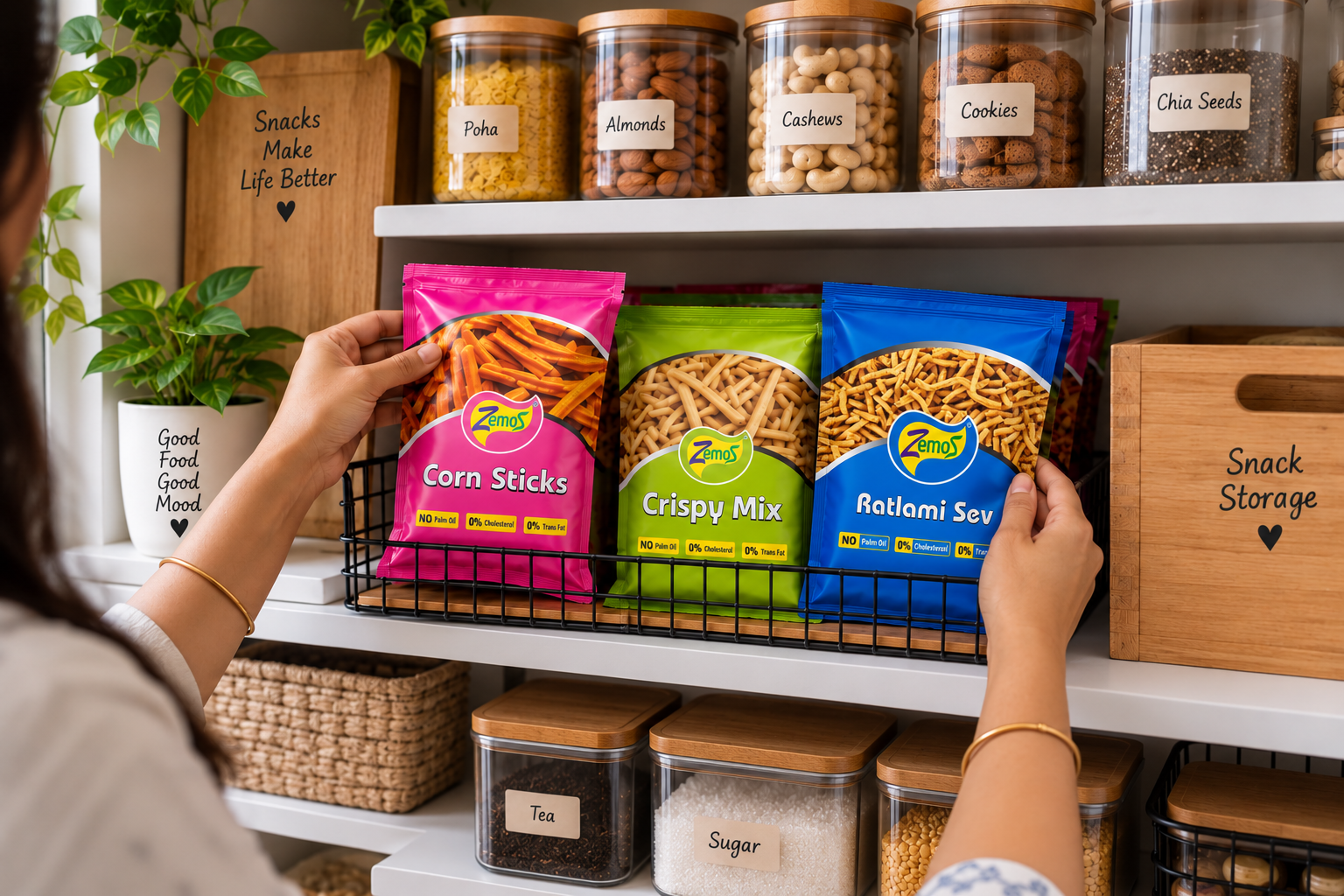
Families can also create a dedicated snack section in their kitchen. Keeping all packaged snacks together makes them easier to locate and prevents packets from being forgotten in different cupboards. A well-organized shelf can also make it easier to select snacks for tea-time, guests, children's breaks, travel, or weekend gatherings.
Storage Is Especially Important for Family Gatherings
Snacks are often purchased in larger quantities before festivals, birthdays, family visits, and other celebrations. During these periods, households may keep several packets available for guests. Proper storage becomes particularly important because the products may not all be consumed immediately.
Instead of opening several packets at the same time, families can open products according to the number of guests and the occasion. Once a packet is opened, any remaining quantity should be closed properly or transferred to a suitable airtight container. Unopened packets should remain in their original packaging until they are needed.
This approach also helps maintain an organized serving area. Different varieties can be brought out as required rather than leaving every packet open throughout the celebration. Guests can still enjoy a wide selection while the remaining snacks stay protected.
Convenient Storage for Office and Travel Snacks
Modern snacking often happens outside the home as well. People carry packaged snacks to offices, colleges, road trips, picnics, and family outings because they are easy to transport. However, storage still matters when snacks are carried from one place to another.
During travel, snacks should ideally be kept away from excessive heat and direct sunlight. If a packet is opened during the journey, it should be closed properly before being placed back into a bag. For larger packs, a clean airtight container can be useful if the snack is expected to be consumed over multiple occasions.
The same principle applies at work. If a packet is kept in an office drawer, it should be protected from moisture, heat, and unnecessary exposure. Once opened, closing it securely helps maintain its quality for the next break.
Why Good Storage Makes Everyday Snacking Better
The value of good storage is ultimately simple: it helps preserve the qualities that made you choose the snack in the first place. A well-stored product is more likely to retain its expected texture, aroma, and flavor compared with a packet that has been repeatedly exposed to air and moisture.
This becomes especially noticeable when snacks are enjoyed slowly. Someone may open a packet on Monday and expect to finish it during several tea breaks throughout the week. Without proper storage, the last serving may not be as enjoyable as the first. With careful handling, the remaining snack has a better chance of maintaining its quality.
Good storage also makes the kitchen more organized and reduces food waste. When snacks are easy to see, properly sealed, and arranged by opening date, families can make better use of what they have purchased. It is a small household habit with practical benefits.
Conclusion
Storing packaged snacks properly is a simple part of enjoying them at their best. While good packaging protects snacks before they are opened, the way a product is handled afterward becomes the responsibility of the household. Keeping packets in a cool, dry place, protecting them from direct sunlight and cooking steam, closing them properly, using clean airtight containers when necessary, and avoiding moisture can all help preserve the desired quality of savory snacks.
The most important thing is consistency. There is no need for a complicated storage system or a large collection of special containers. A clean cupboard, a few suitable airtight containers, and the habit of closing snacks immediately after serving can be enough for many households. Reading the storage instructions on the package and following the manufacturer's recommendations should always come first, while everyday organization can provide additional support.
For modern families, packaged snacks are often kept ready for many different moments, from morning or evening tea to office breaks, travel, family gatherings, festivals, and unexpected guests. Proper storage helps make sure that convenience does not come at the expense of the eating experience. When snacks are protected from moisture, heat, air, and unnecessary exposure, families can enjoy them with greater confidence and less waste.
Ultimately, good snack storage is about taking care of something simple that has become an important part of everyday life. A packet of namkeen may be opened during a quick tea break or shared around a table with family and friends, but the small habits followed before and after that moment can make a real difference. By storing packaged snacks thoughtfully, consumers can help maintain their quality, keep their kitchen organized, and make every snack break a more enjoyable part of the day.