
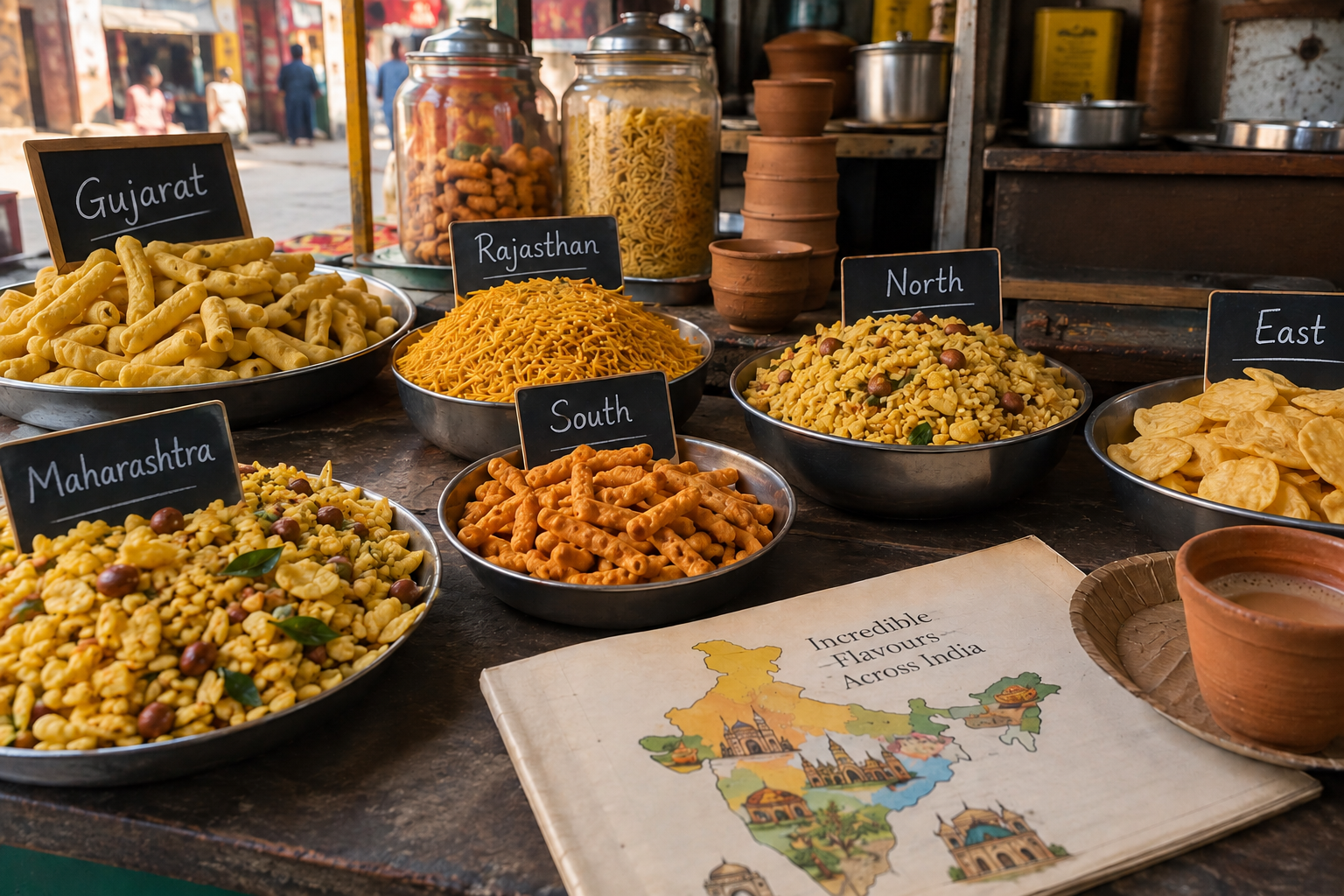
How Snack Choices Reflect Regional Food Preferences in India
India is a country where food changes beautifully from one region to another. The ingredients used in everyday cooking, the spices people prefer, the methods of preparation, and even the snacks enjoyed during a simple evening tea can be very different depending on where a person comes from. This diversity is one of the most interesting parts of Indian food culture, and it can be seen clearly in the way people choose their savory snacks. A snack that is extremely popular in one part of the country may be less familiar in another, while certain varieties of namkeen, sev, mixtures, sticks, and other savory treats have developed strong regional identities over time. These preferences are not random. They are connected to local ingredients, climate, traditions, family habits, festivals, and the tastes people grow up with.
Snacking has always been an important part of everyday life in India. People enjoy snacks during tea breaks, while travelling, when guests arrive, during festivals, at family gatherings, and simply when they want something flavorful between meals. Because India has such a wide range of regional cuisines, snack preferences naturally reflect this diversity. Someone growing up in Gujarat may have a strong liking for gathiya, sev, fafda, or other gram-flour-based snacks, while someone from Maharashtra may be more familiar with snacks such as chivda and regional spicy mixtures. In Rajasthan and Madhya Pradesh, spicy and strongly seasoned namkeen varieties are especially familiar, while southern regions have their own traditions involving ingredients such as rice flour, lentils, coconut, curry leaves, and regional spices.
What makes Indian snacks particularly interesting is that regional preferences do not remain completely separate. People travel, migrate, study, work, and move between cities, taking their food preferences with them. As a result, snacks from one region can become popular across the country. Packaged snacks have made this exchange even easier because consumers can discover different flavors without having to travel to the place where they originated. Today, a family can enjoy several regional styles of namkeen at home, creating a snack selection that represents different parts of India's food culture.
Regional Food Habits Shape Snack Preferences
The food people eat regularly while growing up often influences their snack choices later in life. Families introduce children to particular flavors, spices, textures, and ingredients from an early age. If a child grows up eating sev, gathiya, farsan, or spicy mixtures with evening tea, those flavors can become familiar and comforting. Later, when choosing a packaged snack, that person may naturally look for something with a similar taste profile.
Regional cuisine plays a major role in creating these preferences. Different parts of India have developed food traditions around ingredients that are easily available locally. Gram flour, rice, lentils, peanuts, spices, coconut, potatoes, corn, and various grains appear in different combinations depending on the region. These ingredients influence not only main meals but also the snacks people prepare and enjoy.
Climate can also have an indirect influence on food habits. Local weather conditions, agricultural practices, and traditional preservation methods have historically affected what people eat. In areas where certain ingredients are widely available, they naturally become part of local snack traditions. Over generations, these combinations become familiar and eventually form part of regional food identity.
This is why snack preferences can sometimes tell us something about a person's background. When people talk about their favorite namkeen, they may immediately mention a snack associated with their hometown, family, or childhood. The choice is often connected to memories rather than taste alone.
Gujarat and the Love for Sev and Farsan
Gujarat has a particularly rich snack culture, with savory foods playing an important role in everyday meals, tea-time routines, celebrations, and social gatherings. Sev and other gram-flour-based snacks are familiar across the region, while farsan varieties offer a broad selection of textures and flavors. Snacks are commonly enjoyed at home and are also closely associated with hospitality.
Gujarati snack preferences often demonstrate how one basic ingredient can be transformed into many different foods. Gram flour can be seasoned, shaped, fried, steamed, or combined with other ingredients to create completely different snack experiences. This creativity has helped Gujarati snacks become popular well beyond the state.
For many Gujarati families, snacks are not simply something to eat when hungry. They are part of welcoming guests and enjoying conversations. A plate of farsan or a bowl of sev can easily become part of a family gathering. This connection between snacks and hospitality has helped regional Gujarati favorites maintain their popularity across generations.
Rajasthan and Madhya Pradesh: Strong Flavors and Namkeen Traditions
Rajasthan and Madhya Pradesh are also strongly associated with savory snack traditions, particularly varieties of namkeen that offer distinctive seasoning and bold flavors. Snacks from these regions often reflect the importance of spices and gram-flour-based preparations in local food culture.
Ratlami Sev, for example, is strongly associated with Ratlam in Madhya Pradesh and has become known far beyond its regional roots. Its distinctive seasoning and fine texture make it a recognizable example of how a regional snack can develop a much wider following. Similar regional specialties demonstrate that consumers often look for snacks with a particular flavor identity rather than simply choosing any savory product.
Rajasthan's food traditions have also been influenced by local conditions and the need for foods that can be stored and enjoyed over time. This has contributed to a rich culture of savory snacks and namkeen varieties. Today, many of these regional foods are available in packaged formats, allowing consumers in different cities to enjoy flavors that were once primarily associated with particular communities and locations.
Maharashtra and the Popularity of Chivda and Savory Mixtures
Maharashtra has a diverse snack culture that includes several varieties of chivda, farsan, spicy mixtures, and other savory foods. Chivda is particularly interesting because it can be prepared in many ways, with different ingredients and seasoning combinations depending on family and regional preferences.
The idea of combining multiple ingredients into a single snack reflects a broader Indian approach to food, where different textures and flavors can work together. A mixture may contain grains, pulses, nuts, spices, and other ingredients, creating a snack that is easy to serve and suitable for sharing.
In Maharashtra, snacks are commonly associated with tea-time, festivals, travel, and family gatherings. This makes them an excellent example of how a regional food can become part of several everyday occasions rather than being limited to one specific celebration.
Southern India and Different Ingredient Traditions
Southern Indian snack preferences demonstrate another side of the country's diversity. Different states have developed snack traditions using ingredients such as rice flour, lentils, coconut, curry leaves, sesame, and regional spices. Preparations can vary significantly between Karnataka, Tamil Nadu, Kerala, Andhra Pradesh, and Telangana, creating a broad range of savory choices.
The use of rice and lentil-based ingredients is especially noticeable in many southern snack traditions. These ingredients can be transformed into different shapes, textures, and preparations, while spices and curry leaves add distinctive regional character. Coconut is also an important ingredient in several southern food traditions and can contribute to both flavor and texture.
These regional differences show why it is difficult to describe Indian savory snacks as one single category. Even when two snacks appear similar, their seasoning, ingredients, preparation method, and cultural meaning can be completely different.
Eastern India Brings Its Own Flavor Preferences
Eastern India also contributes significantly to the diversity of Indian snacks. States such as West Bengal, Odisha, Bihar, Jharkhand, and Assam have their own food traditions, shaped by local ingredients and cultural practices. Savory snacks in these regions can include combinations of rice-based ingredients, lentils, vegetables, spices, and other locally familiar foods.
Bihar, for example, has a strong tradition of snacks and foods prepared from ingredients such as gram flour and grains. Bengal has an extensive culture of tea-time snacks and savory preparations, while Odisha has its own range of regional foods connected with local traditions and celebrations.
What is particularly interesting is that people from these regions often develop strong emotional connections with the snacks they grew up eating. A particular flavor can remind someone of a hometown market, a family kitchen, a festival, or an afternoon spent with relatives.
North India and the Popularity of Spiced Snacks
Northern India has a wide range of savory foods influenced by wheat, gram flour, potatoes, spices, and other ingredients. Snacks are commonly enjoyed with tea and are an important part of social gatherings. Spiced mixtures, sev-based snacks, roasted ingredients, and fried savory foods are popular choices across many communities.
The popularity of spicy flavors in many northern snack traditions also demonstrates how seasoning preferences influence packaged snack choices. Consumers who enjoy stronger flavors may look for namkeen with more noticeable spice, while others may prefer mild options.
However, preferences are not fixed. Younger consumers may experiment with flavors from different regions, while families may keep both traditional and newer varieties at home. This creates an interesting combination of regional loyalty and curiosity.
Why Spice Levels Differ From Region to Region
One of the easiest ways to notice regional differences in Indian snacks is through spice preferences. Some communities enjoy strong chili-based flavors, while others prefer balanced seasoning or milder savory profiles. Even the definition of "spicy" can vary from one region to another.
Growing up with particular food habits plays an important role. A person accustomed to strongly seasoned foods may find a mild snack less exciting, while someone raised on lighter flavors may prefer a more balanced snack. These preferences can influence everything from homemade snacks to packaged namkeen.
Regional spices also contribute to these differences. Chili, black pepper, cumin, coriander, turmeric, asafoetida, curry leaves, mustard seeds, and other seasonings can be used in different proportions and combinations. As a result, two snacks made from similar basic ingredients can taste completely different.
Texture Is Another Important Regional Preference
Taste is only one part of snack selection. Texture can be equally important. Some consumers prefer fine sev that is delicate and easy to mix with other foods, while others enjoy thicker sev, sticks, roasted ingredients, or mixtures containing several different textures.
Different regions have developed their own preferences for how snacks should feel when eaten. Some traditional preparations focus on crisp fried textures, while others combine softer ingredients with crisp elements. Packaged snack manufacturers have also expanded this variety by offering products in different shapes and sizes.
For consumers, texture can become part of the identity of a favorite snack. Someone may say they prefer a particular sev because it is fine, while another person may prefer a thicker snack because it feels more substantial. These small differences can strongly influence purchasing decisions.
Festivals Strengthen Regional Snack Traditions
Festivals are one of the biggest reasons regional snack preferences remain strong. During celebrations, families often prepare or purchase foods connected with their traditions. Snacks may be served to guests, exchanged between relatives, or placed on tables alongside sweets and beverages.
Festival food also provides an opportunity for younger generations to learn about regional traditions. Children see parents and grandparents choosing familiar snacks and gradually develop their own preferences. In this way, food culture continues without requiring formal teaching.
At the same time, festivals encourage people to try foods from other regions. Families may purchase different types of namkeen for guests, especially when relatives come from different parts of the country. This creates a natural exchange of flavors.
Travel and Migration Are Blending Snack Preferences
India's cities have become increasingly diverse because people move for education, employment, business, and family reasons. When people relocate, they often carry their food preferences with them. A person from Gujarat may look for sev or gathiya after moving to another city, while someone from Maharashtra may search for their preferred chivda.
Over time, local shops and packaged food brands respond to these changing demands. Regional snacks become available in new markets, allowing consumers to maintain connections with familiar flavors.
This movement has created an interesting situation where regional snacks are becoming national favorites. People do not necessarily need to belong to a particular region to enjoy its food. Curiosity, social media, travel, and availability have made it easier for consumers to explore different snack traditions.
Packaged Snacks Make Regional Flavors More Accessible
The growth of packaged snacks has changed the way people experience regional food preferences. Traditionally, someone might have needed to visit a particular city or rely on family members to taste a regional specialty. Today, packaged formats make many snacks easier to purchase, store, carry, and share.
This convenience is particularly useful for people living away from their hometowns. A familiar packet of namkeen can bring back memories of home while also fitting naturally into a busy modern lifestyle. At the same time, packaged snacks allow consumers to discover products they may never have encountered otherwise.
Some important reasons packaged regional snacks have become popular include:
· They make regional flavors easier to access in different cities and communities.
· They are convenient for travel, office breaks, family gatherings, and everyday snacking.
· They allow consumers to explore different regional tastes without changing their routine.
Younger Consumers Are Exploring Beyond Regional Favorites
While older generations may have stronger connections with specific regional snacks, younger consumers are often more experimental. They may enjoy traditional namkeen one day and try a snack associated with another part of the country the next. Social media, travel videos, food content, online shopping, and changing urban lifestyles have all encouraged this curiosity.
This does not mean younger consumers are abandoning traditional foods. In many cases, they are expanding their preferences. A young person may enjoy the snacks their grandparents grew up eating while also exploring new flavors from other regions.
This combination of tradition and experimentation is helping Indian snack culture evolve. Regional identity remains important, but it is no longer a strict boundary around what people are willing to eat.
The Emotional Side of Regional Snack Preferences
Food preferences are often deeply emotional. A favorite snack can remind someone of childhood, family members, holidays, school days, or hometown visits. This emotional connection is one reason regional snacks can remain popular even when consumers have access to hundreds of alternatives.
When people move away from home, familiar foods can provide a sense of comfort. A packet of a favorite namkeen may seem like a simple food product, but it can carry memories of family tea-time, festival celebrations, local shops, or conversations with relatives.
For brands, understanding this emotional connection is important. Consumers are not always choosing snacks based only on price or convenience. Familiarity and personal memories can be powerful influences.
Regional Preferences Are Evolving, Not Disappearing
Indian snack culture continues to change as lifestyles, cities, and consumer expectations evolve. However, regional preferences are unlikely to disappear. Instead, they are becoming part of a larger and more diverse snack culture.
People now have more choices than ever before, but they still return to familiar flavors. A person may enjoy trying a new snack but continue buying the namkeen they have known since childhood. This balance between exploration and familiarity is one of the most interesting features of modern Indian snacking.
Regional foods also continue to inspire new snack products. Traditional ingredients and flavor combinations can be presented in convenient formats, making them suitable for modern consumers while keeping their regional character recognizable.
How Regional Preferences Shape the Future of Snacking
The future of Indian snacking is likely to become even more diverse. Consumers are increasingly interested in discovering different flavors while still valuing foods that feel familiar. This creates opportunities for snack brands to celebrate regional diversity and introduce consumers to different taste profiles.
A successful snack does not necessarily need to appeal to everyone in exactly the same way. Instead, consumers can choose products based on their personal preferences, family traditions, and regional tastes. This creates space for a wide range of snacks to coexist.
For a brand such as Zemos Foods, this diversity represents an important part of the Indian snack experience. Different products can suit different moments, preferences, and generations, while the broader idea of enjoying savory snacks remains universal.
Conclusion
Snack choices in India tell a fascinating story about regional food preferences, family traditions, local ingredients, and changing lifestyles. From sev and gathiya in Gujarat to Ratlami Sev in Madhya Pradesh, chivda in Maharashtra, and rice- and lentil-based savory preparations in southern regions, every part of the country contributes something different to India's snack culture.
At the same time, regional boundaries are becoming more flexible. Travel, migration, packaged food, digital discovery, and changing consumer habits have allowed people to enjoy snacks from different parts of the country. A favorite regional snack can now be found far from the place where it originated, while younger consumers are increasingly comfortable exploring flavors outside their traditional preferences.
What remains constant is the role of snacks in everyday life. They accompany tea, conversations, celebrations, journeys, family gatherings, and quiet moments at home. Regional differences give Indian snacks their variety, while shared habits give them their lasting appeal. In the end, the way people choose snacks reflects not only what they like to eat but also where they come from, what they remember, and how India's rich food culture continues to evolve from one generation to the next.