
Table of Contents
- How Indian Snack Flavours Are Changing: From Classic Namkeen to New-Age Taste
- Familiar Flavours Still Matter
- Why New Flavours Are Appearing in Indian Snacks
- The Rise of Fusion Snacking
- Traditional Namkeen and Modern Snacking Can Grow Together
- What Consumers May Look for in a Modern Snack
- The Future of Indian Namkeen Is About Choice
- Conclusion
How Indian Snack Flavours Are Changing: From Classic Namkeen to New-Age Taste
Indian snacking is entering an interesting phase where familiar flavours and new taste ideas are appearing side by side. For years, Indian consumers have enjoyed snacks built around flavours such as spicy masala, tangy chaat, cumin, chilli, salt and other traditional seasonings. Today, these familiar tastes are still important, but consumers are also being introduced to newer combinations inspired by global cuisines, fusion foods and changing food trends. Recent NielsenIQ research on India's snacking landscape highlights this shift, noting that local flavours continue to be important while global and fusion flavours are also becoming part of the wider snack market.
Familiar Flavours Still Matter
One of the most interesting things about the Indian snack market is that consumers do not necessarily have to choose between traditional and modern flavours. A familiar flavour can provide the comfort people already know, while a new combination can create curiosity. NielsenIQ's 2026 research specifically points to local favourites such as Chaat Masala and Tikka Masala as important flavour choices while also identifying growing interest in global and fusion profiles.
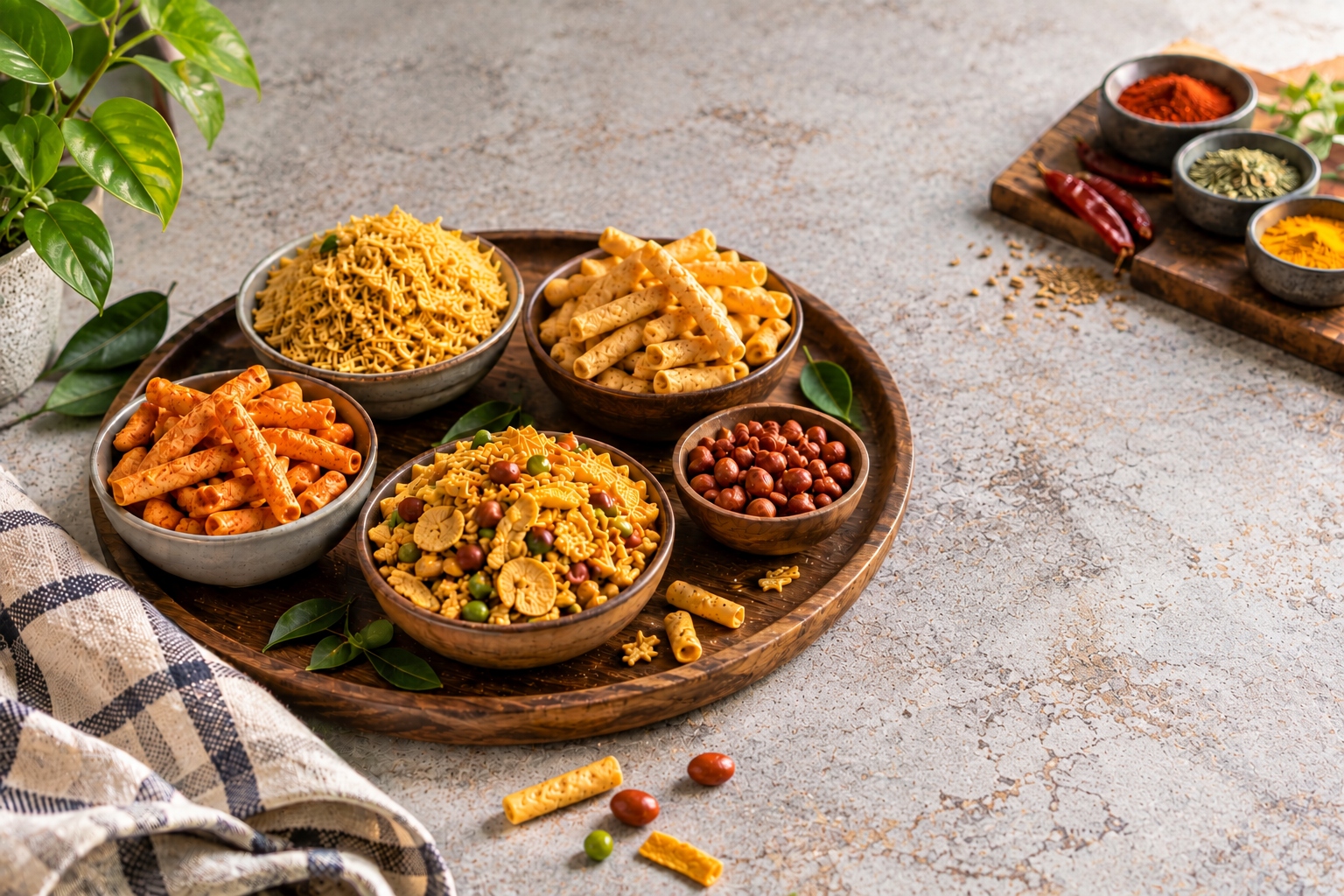
This creates an opportunity for the Indian namkeen category because traditional savoury snacks already have a strong foundation of flavours and textures. Sev, gathiya, chevda, mixtures and other namkeen varieties can carry familiar Indian seasoning while also providing opportunities for different flavour combinations. The result is a snack category that can remain connected to familiar Indian tastes while responding to consumers who enjoy trying something different.
Why New Flavours Are Appearing in Indian Snacks
Changing lifestyles and a wider exposure to different cuisines are influencing the way people discover food. Consumers today encounter food through restaurants, travel, social media, online shopping, quick-commerce platforms and international food trends. As these experiences become part of everyday life, they can also influence what people expect from packaged snacks.
A 2026 NielsenIQ report describes Indian snacking as increasingly adventurous, with global and fusion flavours entering the mainstream while familiar local flavours continue to anchor consumer preferences. This does not mean traditional namkeen is disappearing. Instead, the snack category is becoming broader, giving consumers more opportunities to move between familiar favourites and newer taste experiences.
The same direction can also be seen in product innovation. In May 2026, PepsiCo India announced Lay's Mini Stix, combining a familiar potato-snack base with an Indian savoury format and fusion-inspired masala flavours. The launch illustrates how established snack formats can be adapted to changing preferences without completely moving away from familiar Indian taste cues.
The Rise of Fusion Snacking
Fusion flavours are becoming an interesting part of modern Indian snacking because they connect two different food experiences. A snack may use a familiar Indian base but introduce a seasoning inspired by another cuisine. This approach allows consumers to experiment without moving too far away from the flavours they already understand.
For example, global food influences can introduce ideas such as peri-peri, Mexican-style seasoning, Korean-inspired flavours or other international taste profiles, while Indian spices can keep the overall experience familiar. NielsenIQ identifies this combination of local and global influences as an important part of current flavour innovation in India.
For namkeen brands, this creates an interesting space for experimentation. The crunch, shape and texture of an established snack can remain familiar while seasoning becomes the element that introduces something new.
Traditional Namkeen and Modern Snacking Can Grow Together
The growth of new flavours does not necessarily mean that classic namkeen varieties become less relevant. In fact, India's snack market continues to include a wide range of regional and traditional products. A Ministry of Food Processing Industries sector profile notes that ethnic and regional ready-to-eat and ready-to-cook foods, including regional Indian snacks, are gaining traction in domestic and global markets.
This is important for Indian namkeen because regional flavours are already part of the category's identity. Products such as sev, gathiya, chevda and mixtures have their own flavour profiles and cultural associations. Modern snack innovation can therefore build on an existing foundation rather than starting from zero.
For a brand such as Zemos Foods, this broad flavour landscape fits naturally with a portfolio that includes products such as Ratlami Sev, Bhavnagri Gathiya, Tikha Mitha, Poha Chevda, Hot Mix, Khatta Mitha, Medium Sev and other Indian savoury snacks.
What Consumers May Look for in a Modern Snack
Taste remains an important part of the snack experience, but current consumer research suggests that people are also considering other factors when choosing snacks. An IBEF report covering a 2025 consumer study found that 72% of surveyed respondents were seeking snacks with functional benefits, while 94% wanted nutrition without compromising flavour. The study surveyed approximately 6,000 people, so its findings should be understood as survey results rather than a measurement of every Indian consumer.
This shows why modern snack development is becoming more complicated. A product may need to provide an enjoyable flavour while also fitting changing expectations around ingredients, convenience, packaging and portion choices. Different consumers may prioritise different factors, which makes variety within the snack category increasingly relevant.
- Classic flavours: familiar masala, sev, gathiya, chevda and traditional namkeen profiles.
- New-age flavours: fusion seasonings, international influences and new combinations built around familiar Indian snack formats.
The Future of Indian Namkeen Is About Choice
The Indian snack market is becoming more diverse rather than moving in only one direction. Traditional flavours continue to provide familiarity, while new combinations give consumers opportunities to explore different tastes. Industry research from MoFPI also points to new product launches and regional flavours as factors supporting the organised snacks sector.
For consumers, this means the snack shelf can offer something different for almost every preference. Someone may want a familiar sev with evening tea, another person may prefer a spicy mixture, while someone else may be interested in trying a newer flavour combination. The growing range of options makes snacking more exploratory without removing the traditional products that have been enjoyed for generations.
Conclusion
The future of Indian namkeen and packaged snacks is not simply about replacing traditional flavours with modern ones. Instead, the market is creating space for both. Familiar Indian flavours continue to provide comfort and recognition, while fusion and global influences are encouraging consumers to explore new taste combinations. Recent research from NielsenIQ, MoFPI and other industry sources shows that flavour innovation, regional tastes and changing consumer expectations are all playing a role in the development of India's snack category.
For Zemos Foods and the wider Indian namkeen industry, this creates an opportunity to keep celebrating established favourites while continuing to explore the possibilities of modern snacking. From classic sev and gathiya to mixtures, chevda and newer flavour ideas, the Indian snack shelf is becoming a place where familiar taste and new experiences can exist together.